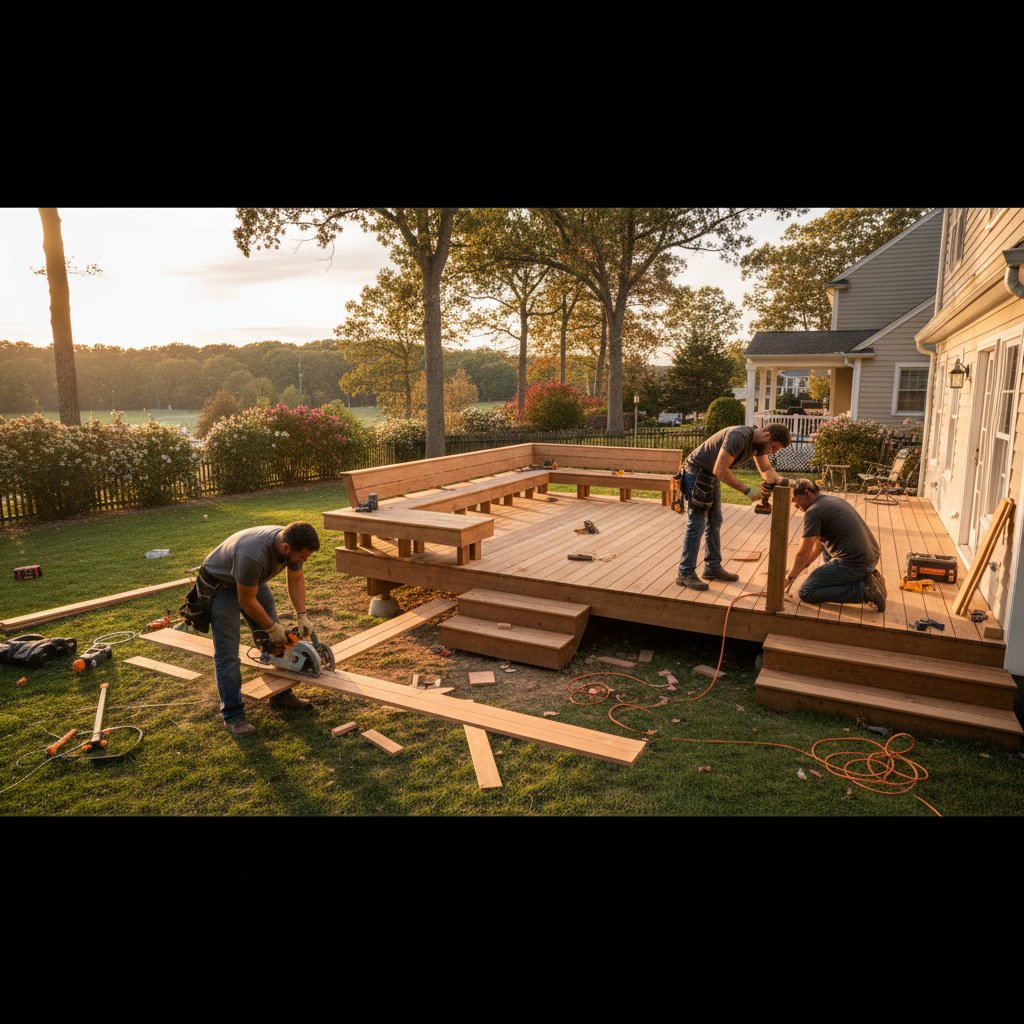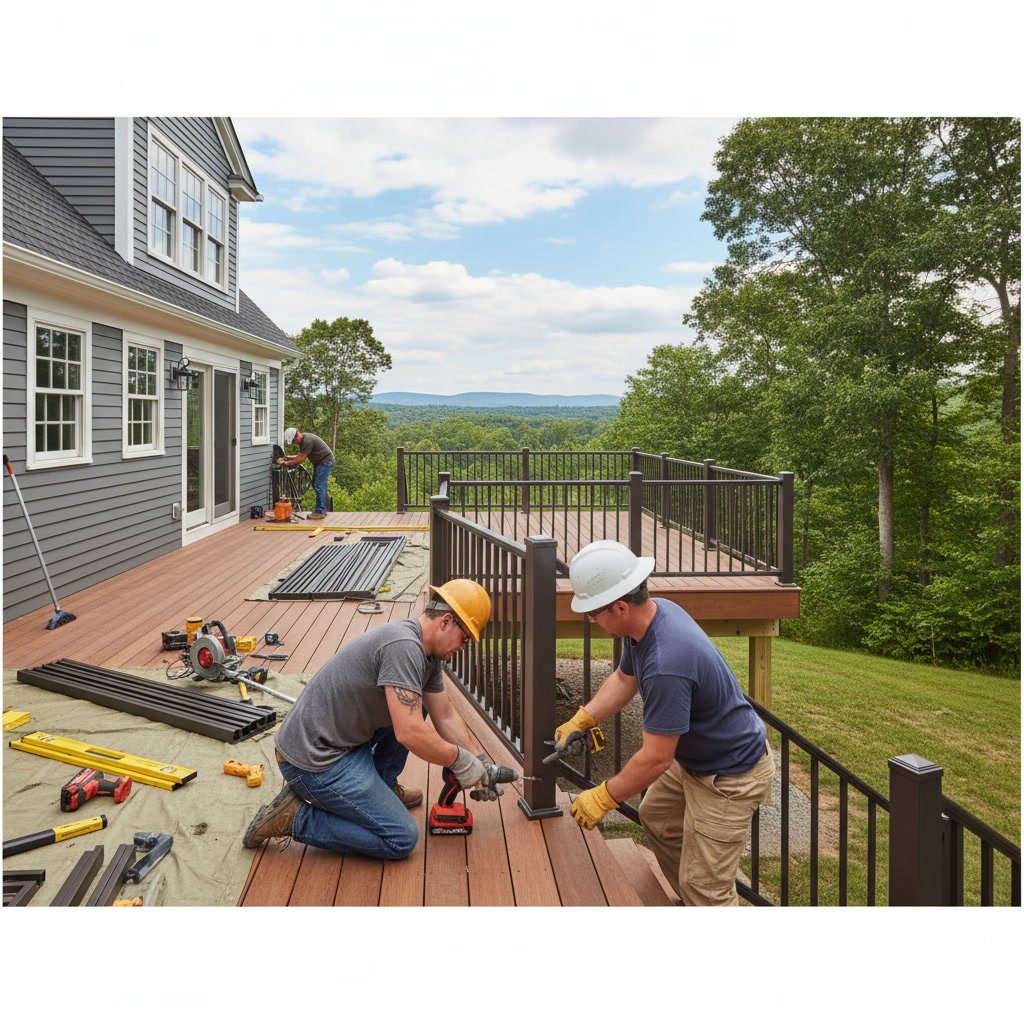
Replacing worn-out deck railings or adding new safety features to your Massachusetts home requires understanding the numbers before you commit. The railing installation cost in Massachusetts typically ranges from $2,500 to $8,500 for most residential projects, though your final price depends on material choice, linear footage, site conditions, and local labor rates. This guide breaks down every cost factor so you can plan your budget with confidence.
Whether you’re updating a small porch or wrapping an entire deck, knowing what to expect helps you make smart decisions about materials, contractors, and timing. Let’s examine the real numbers behind railing projects across Massachusetts.
Average Railing Installation Cost by Material
Material choice drives the bulk of your project cost. Each option delivers different aesthetics, maintenance requirements, and longevity.
Wood railings remain the most budget-friendly option at $20 to $45 per linear foot installed. Pressure-treated pine starts around $20 per foot, while cedar and redwood climb to $35 to $45 per foot. Wood offers classic appeal and easy customization, but requires regular staining or sealing every two to three years.
Composite railings cost $35 to $70 per linear foot. Brands like Trex, TimberTech, and Fiberon combine wood fibers with plastic polymers for low-maintenance durability. These systems resist fading, splintering, and rot while mimicking natural wood grain. The higher upfront cost pays off through minimal maintenance over 25-plus years.
Vinyl railings run $25 to $50 per linear foot installed. These lightweight systems install quickly and never need painting. White remains the most affordable color, with premium colors and textures adding $5 to $10 per foot. Vinyl performs well in Massachusetts weather but can become brittle in extreme cold.
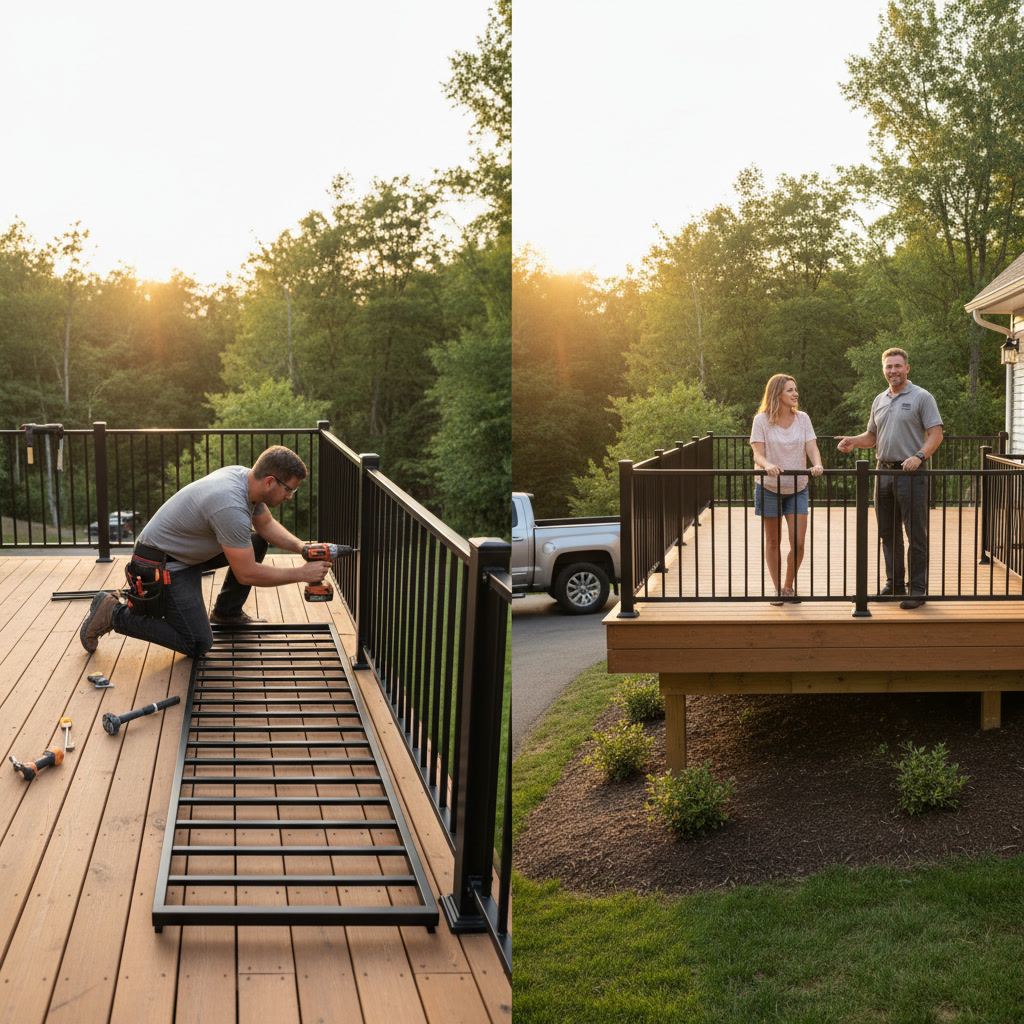
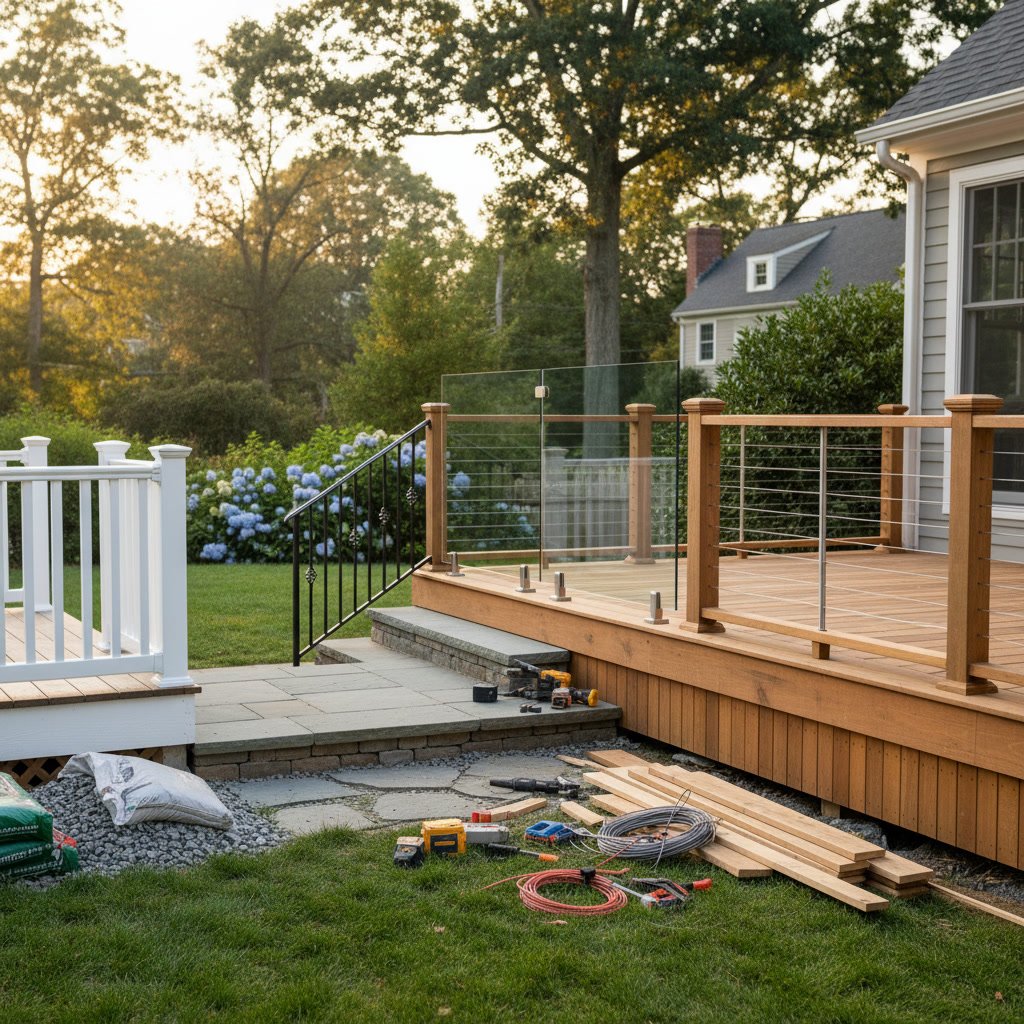
Aluminum railings range from $40 to $80 per linear foot. Powder-coated aluminum resists rust and corrosion while offering sleek, modern lines. Glass panel inserts for unobstructed views push costs to $100 to $200 per linear foot. Many homeowners in Wellesley and Newton choose aluminum for its clean aesthetic and minimal upkeep.
Cable railings cost $60 to $150 per linear foot. Stainless steel cables stretched between posts create contemporary, open sightlines. Installation requires precision tensioning and quality hardware. These systems work beautifully on modern homes but demand professional installation.
Wrought iron railings start at $80 per linear foot and climb past $200 for custom ornamental work. Steel offers unmatched strength and timeless elegance but requires periodic repainting to prevent rust in Massachusetts humidity.
Labor Costs for Professional Installation
Professional installation typically accounts for 40 to 60 percent of your total railing installation cost. Massachusetts contractors charge $35 to $75 per hour depending on experience, location, and project complexity.
A standard 30-foot railing section on an existing deck takes a skilled team four to eight hours to complete. This includes removing old railings, prepping posts, installing new rails and balusters, and final adjustments. Simple straight runs install faster than projects with multiple corners, stairs, or landing transitions.
Complex installations with glass panels, cable systems, or custom metalwork require specialized skills and take longer. Expect to pay premium rates for these installations.
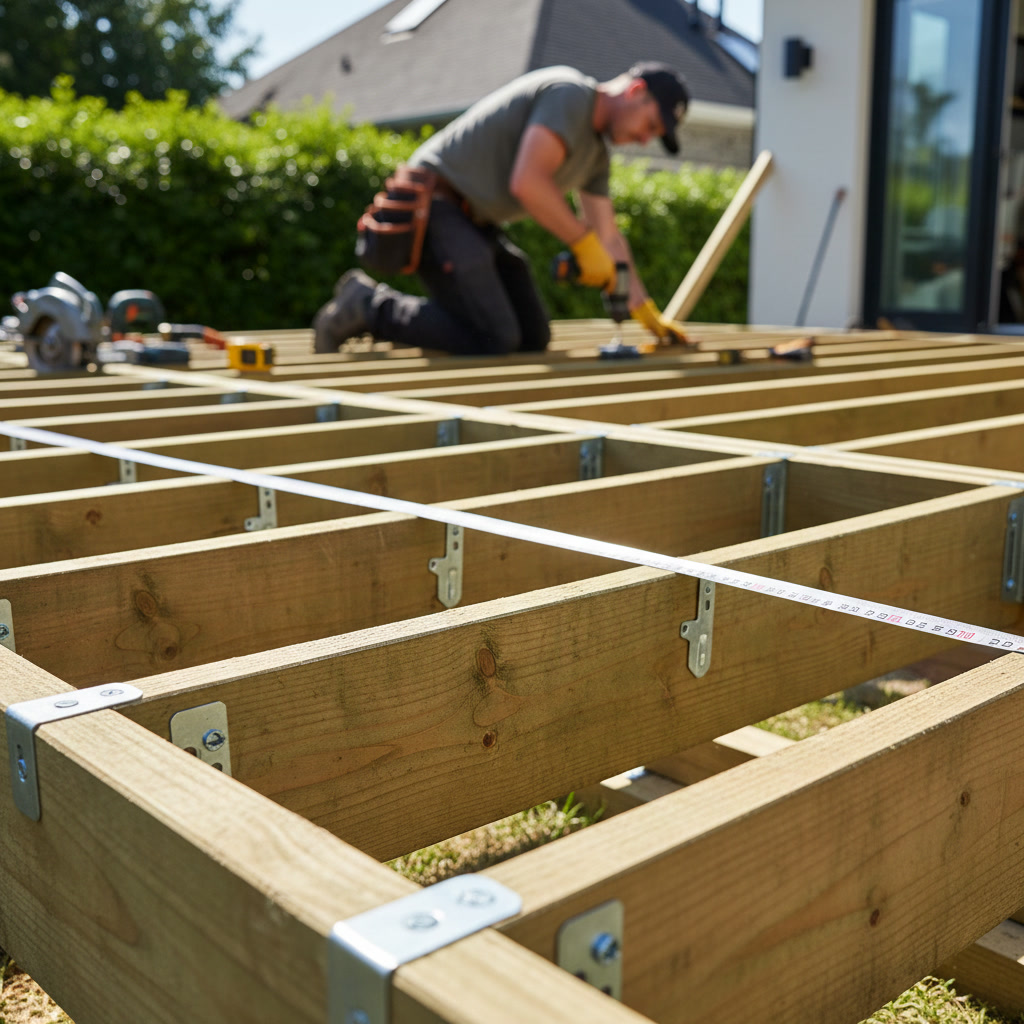
Site conditions affect labor hours significantly. Second-story decks, difficult access, uneven terrain, or substrate repairs add time and cost. A railings installation project that requires new posts or structural reinforcement takes substantially longer than a simple rail replacement.
Pro Tip: Get itemized quotes that separate materials from labor. This transparency helps you compare contractors accurately and understand where your money goes.
Permits, Codes, and Inspection Fees
Massachusetts building codes require railings on any deck or porch more than 30 inches above grade. Rails must stand at least 36 inches high, with balusters spaced no more than four inches apart to prevent children from slipping through.
Most municipalities require permits for new railing installations. Permit fees range from $50 to $300 depending on your town and project scope. Cities like Worcester and Framingham conduct inspections to verify code compliance before issuing final approval.
Hiring a licensed contractor like ANJO Home Improvement Inc ensures your project meets all local requirements. Licensed professionals understand Massachusetts codes, pull necessary permits, and schedule inspections as part of their service. This protects your investment and prevents costly corrections later.
Some homeowners attempt DIY railing projects to save money but risk failing inspection or creating safety hazards. The small upfront savings rarely justify the potential problems.
Cost Factors That Affect Your Project
Several variables beyond material and labor influence your final railing installation cost.
Linear Footage and Configuration
More footage means higher costs, but price per foot often decreases on larger projects. A 100-foot installation typically costs less per foot than a 20-foot run due to efficiency gains and bulk material pricing.
Corners, angles, and stairs increase complexity. Each stair section requires custom cuts, additional posts, and careful measurement. Multi-level decks with multiple landings cost more than simple rectangular layouts.
Existing Structure Condition
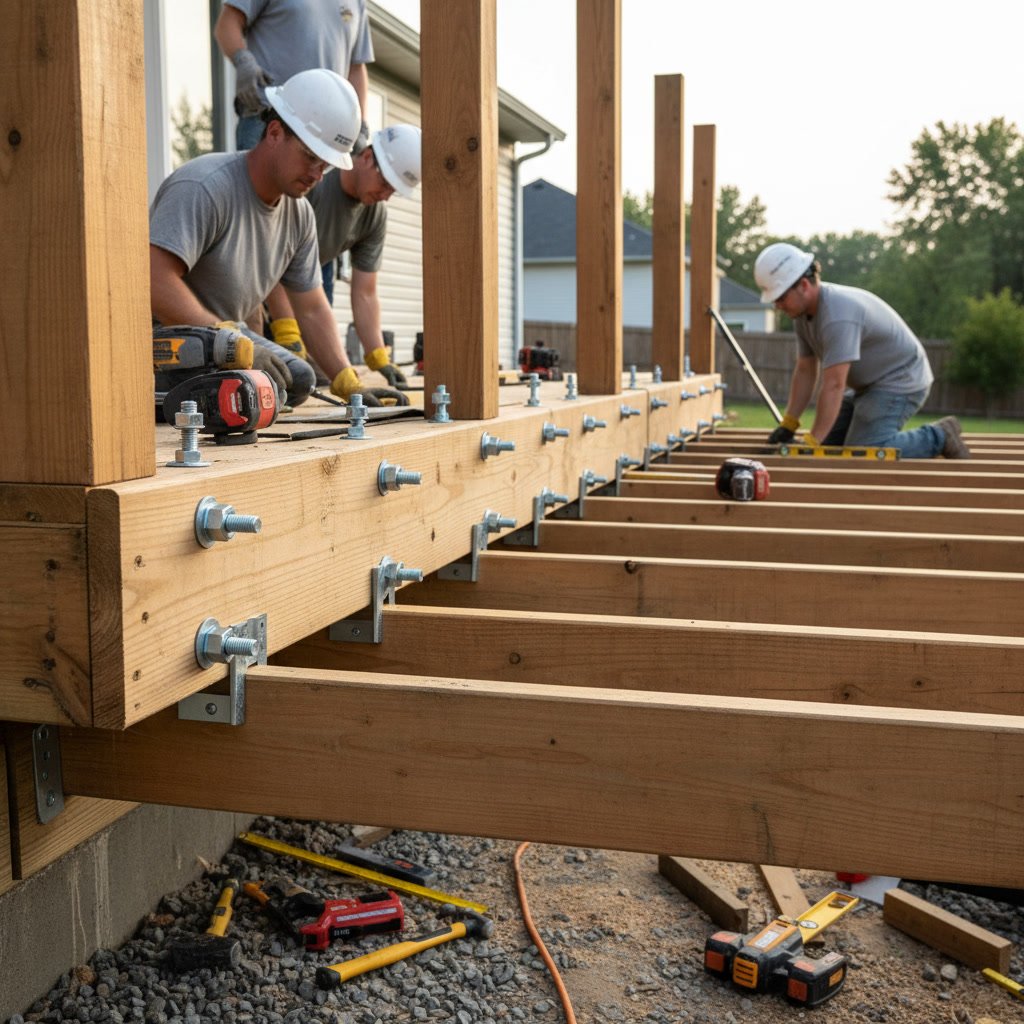
Rotted posts, damaged ledger boards, or structural issues require repair before new railings go up. Fixing these problems adds $500 to $3,000 depending on severity. An inspection by a qualified deck builder identifies hidden issues before you commit to a railing budget.
Older decks may need reinforcement to meet current code. This ensures your new railings attach to solid, safe framing.
Regional Labor Rates
Labor costs vary across Massachusetts. Eastern suburbs like Brookline and Weston typically see higher contractor rates than central or western towns. Expect $45 to $75 per hour near Boston, versus $35 to $55 per hour in areas like Shrewsbury.
This doesn’t mean you should compromise on quality for a lower rate. Experienced contractors deliver better results, complete projects faster, and stand behind their work with solid warranties.
Seasonal Timing
Spring and summer bring peak demand for exterior projects. Contractors book months ahead, and busy schedules sometimes mean higher prices. Fall and early winter offer better availability and potential discounts, though weather can delay outdoor work.
Planning your railing project during shoulder seasons often yields better pricing and faster scheduling.
DIY vs Professional Installation
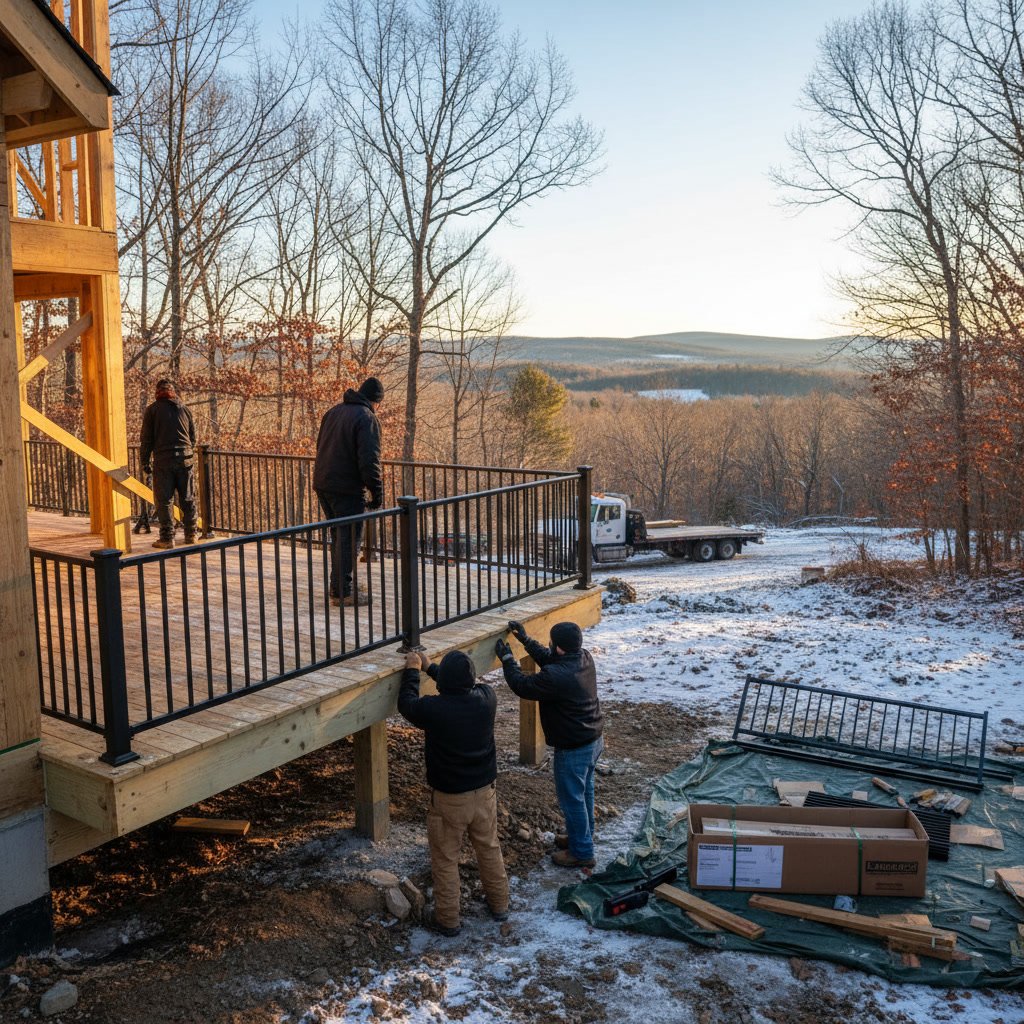
DIY railing kits promise savings but demand careful consideration. Material costs for a DIY project range from $15 to $60 per linear foot depending on your chosen system. You’ll save labor costs but invest significant time and effort.
Successful DIY installation requires proper tools, carpentry skills, and code knowledge. Mistakes in measurement, spacing, or attachment create safety hazards and fail inspections. Repairs often cost more than hiring a professional initially.
Professional installation brings expertise, efficiency, and accountability. Licensed contractors understand Massachusetts building codes, work safely, and guarantee their work. Most residential railing projects complete in one to three days with professional crews.
For complex systems like cable or glass railings, professional installation isn’t optional. These systems require specialized tools, technical knowledge, and precision that most homeowners lack.
If your project involves structural concerns, consider reading about when to repair or replace your deck to address the foundation before tackling railings.
Additional Costs to Consider
Beyond basic installation, several expenses may apply to your project.
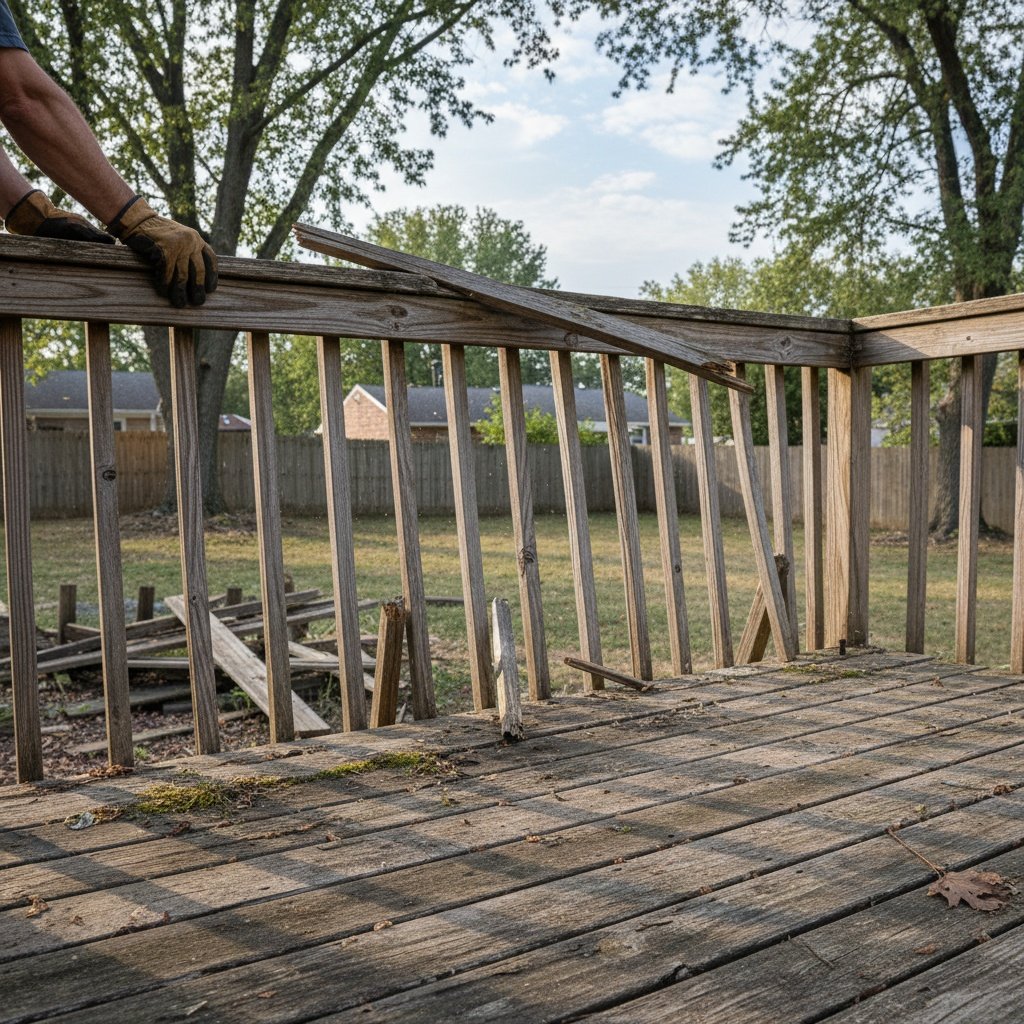
Removal and disposal of old railings adds $200 to $800. Some contractors include this in their quote, while others charge separately. Verify this upfront to avoid surprise fees.
Post caps and finials add decorative touches for $5 to $50 per post. These small details enhance curb appeal and finish the look professionally.
Lighting integration costs $30 to $150 per light fixture. LED post cap lights or under-rail strips improve safety and ambiance. Running electrical lines increases installation complexity and cost.
Staining or painting wood railings adds $2 to $5 per linear foot if not included in your installation quote. This protects your investment and matches your home’s exterior palette.
Warranty upgrades on materials may cost extra but provide peace of mind. Premium composite and aluminum systems offer 20 to 25-year warranties against fading, staining, and structural defects.
If your railing project connects to a larger renovation, explore related costs in our guide on building a deck in Massachusetts.
How to Get Accurate Quotes
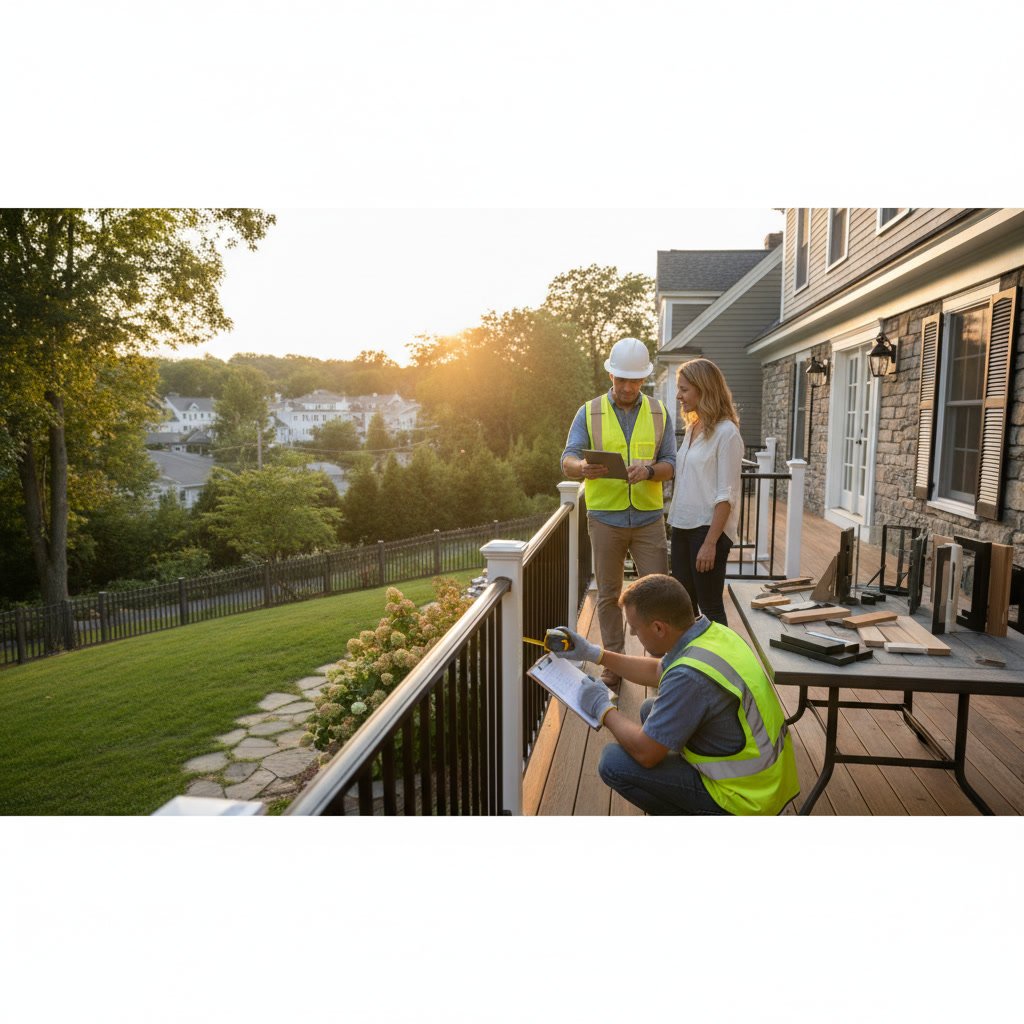
Start by measuring your project accurately. Calculate total linear footage for all sections requiring railings. Note corners, stairs, and special features that affect complexity.
Request quotes from at least three licensed contractors. Provide identical project specifications to each for fair comparison. Itemized estimates that separate materials, labor, permits, and additional work help you understand pricing.
Ask about included services. Does the quote cover old railing removal? Permits? Site cleanup? Post reinforcement if needed? These details matter when comparing bids.
Verify licensing and insurance. Massachusetts requires home improvement contractors to register with the state. Ask for proof of liability insurance and workers’ compensation coverage.
Check references and view completed projects. Photos show quality standards, while references reveal reliability, communication, and problem-solving abilities.
Understand payment terms. Reputable contractors request deposits of 10 to 30 percent, with remaining payments tied to project milestones. Avoid contractors demanding full payment upfront.
Key Takeaway: The lowest quote isn’t always the best value. Balance price with experience, quality materials, warranty coverage, and contractor reputation.
Return on Investment
Quality railings improve safety, functionality, and curb appeal. While you may not recoup 100 percent of your railing installation cost at resale, the investment pays dividends in usability and property value.
Safe, attractive railings make outdoor spaces more enjoyable for your family. They also reassure potential buyers about deck safety and maintenance standards if you sell.
Low-maintenance materials like composite or aluminum reduce long-term costs. Though pricier initially, these systems eliminate the recurring expense and labor of staining, sealing, and repairing wood every few years.
Over 20 years, a composite railing system often costs less than wood when you factor in maintenance time and materials. This math makes premium materials increasingly attractive for long-term homeowners.
Frequently Asked Questions
What is the cheapest railing option for a deck?
Pressure-treated wood railings offer the lowest upfront cost at $20 to $30 per linear foot installed. However, wood requires regular maintenance including staining every two to three years. When you factor in long-term upkeep, low-maintenance vinyl or composite systems may prove more economical over the railing’s lifespan.
Do I need a permit to replace deck railings in Massachusetts?
Most Massachusetts municipalities require permits for railing installation or replacement on decks above 30 inches. Permit requirements and fees vary by town, ranging from $50 to $300. Your contractor should handle permit applications and schedule required inspections as part of professional installation services.
How long does railing installation take?
Professional crews typically complete a standard residential railing installation in one to three days depending on linear footage and complexity. A simple 30-foot section may finish in four to eight hours, while larger projects with stairs, multiple levels, or custom features take longer. Weather, site access, and substrate repairs can extend timelines.
Can I mix railing materials on the same deck?
Yes, many homeowners combine materials for visual interest and budget management. Common combinations include wood or composite top rails with aluminum balusters, or traditional posts with cable infill. Ensure materials complement each other aesthetically and meet local building codes. Professional designers can help create cohesive mixed-material designs.
How often do railings need replacement?
Lifespan varies by material and maintenance. Wood railings last 10 to 20 years with proper care, while composite and vinyl systems endure 25 to 30 years or more. Aluminum and steel railings can last 30-plus years. Replace railings when you notice loose connections, rot, significant damage, or when they fail to meet current safety codes.
Making Your Decision
Understanding railing installation cost helps you plan a realistic budget and choose materials that fit your needs and timeline. Massachusetts homeowners typically invest $2,500 to $8,500 for professional railing installation, with final costs reflecting material choice, linear footage, site conditions, and labor rates in your area.
Quality railings protect your family, enhance your outdoor living space, and contribute to your home’s long-term value. Working with experienced professionals ensures code compliance, proper installation, and results that last for decades.
ANJO Home Improvement Inc serves homeowners throughout Hudson, Marlborough, Framingham, and surrounding Massachusetts communities with expert railing installation services. Our team handles every detail from permits to final inspection, delivering safe, beautiful railings built to last. Call +17745056597 to discuss your project and receive a detailed quote based on your specific needs and site conditions.