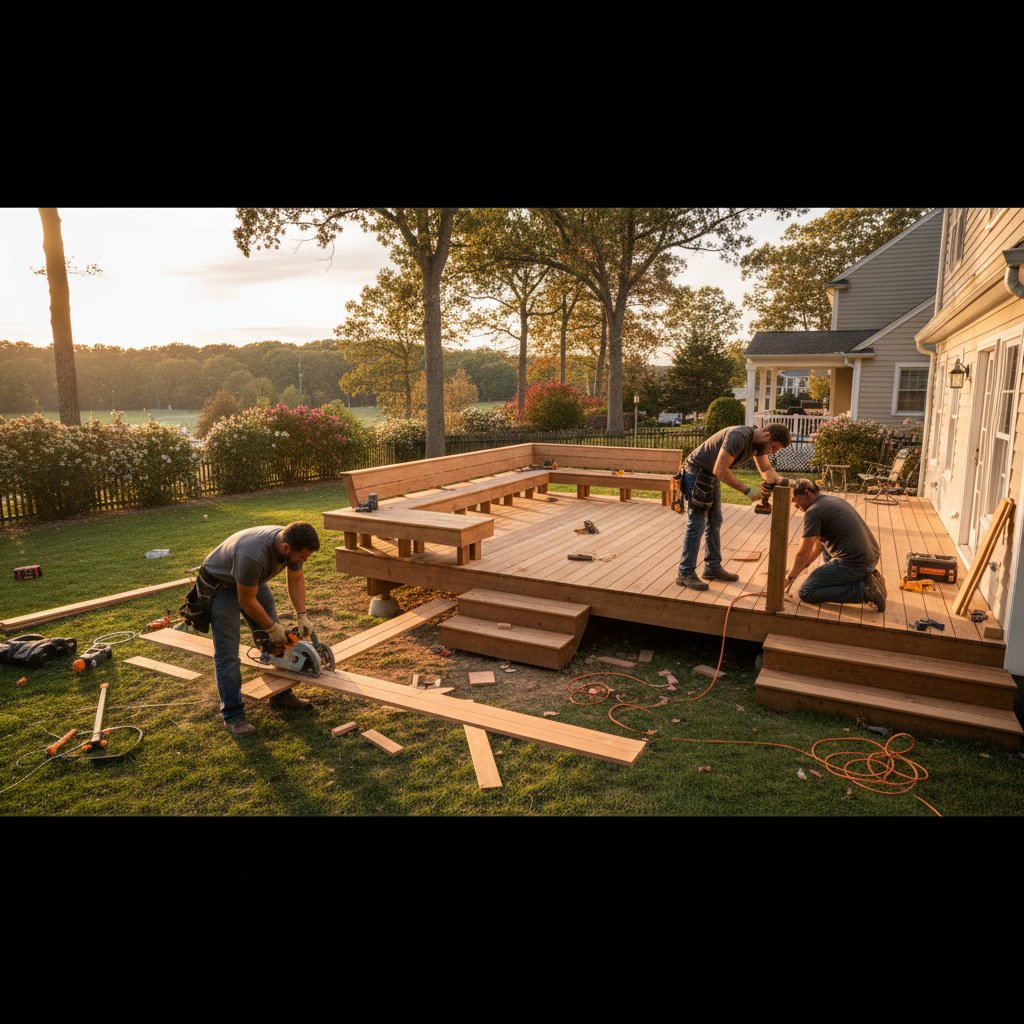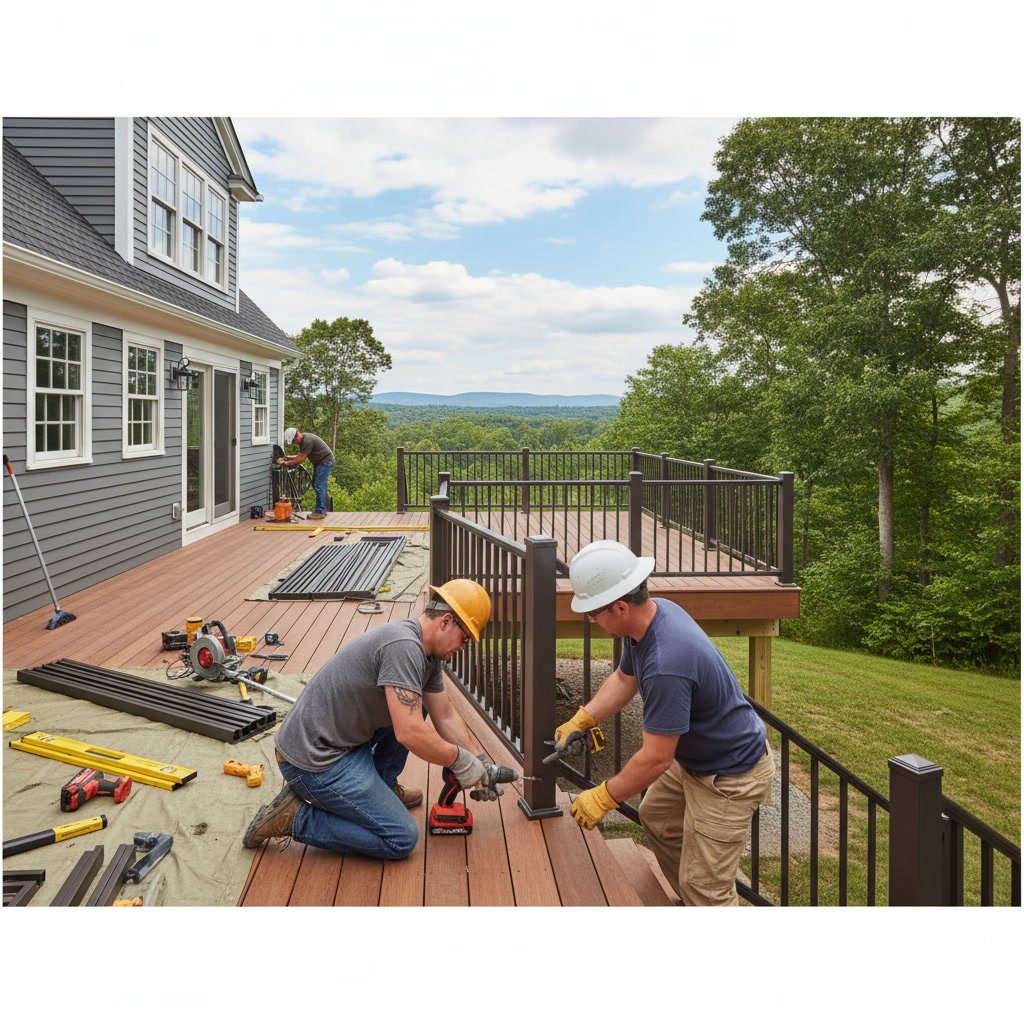
Your deck shows visible signs of wear. Boards are warping, railings feel loose, and you’re questioning whether a few repairs will suffice or if it’s time for a complete replacement. The decision to repair or replace deck structures is one of the most common dilemmas homeowners face, and making the wrong choice can cost you thousands of dollars or compromise safety.
This guide walks you through the exact factors professionals evaluate when assessing deck condition, the specific warning signs that demand immediate attention, and the cost considerations that should guide your decision. By the end, you’ll know exactly which route makes sense for your situation.
Critical Warning Signs Your Deck Needs Attention
Before you can decide whether to repair or replace deck components, you need to understand what you’re looking at. Some issues are cosmetic and easily fixed. Others signal structural failure that puts everyone at risk.
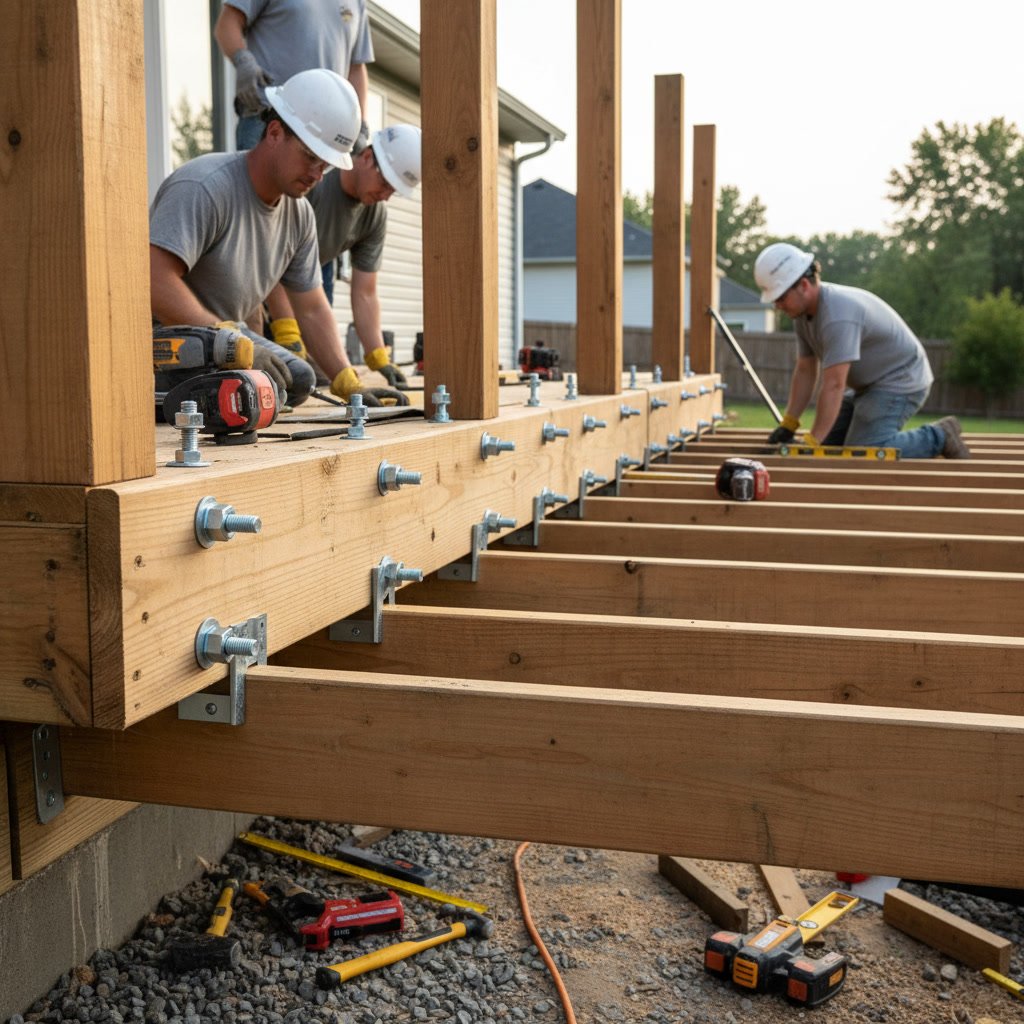
Start by checking the ledger board, the component that attaches your deck to your house. Pull back any siding or flashing and look for rot, rust on fasteners, or gaps between the board and the house. A failing ledger board is the number one cause of catastrophic deck collapses and always requires immediate professional attention.
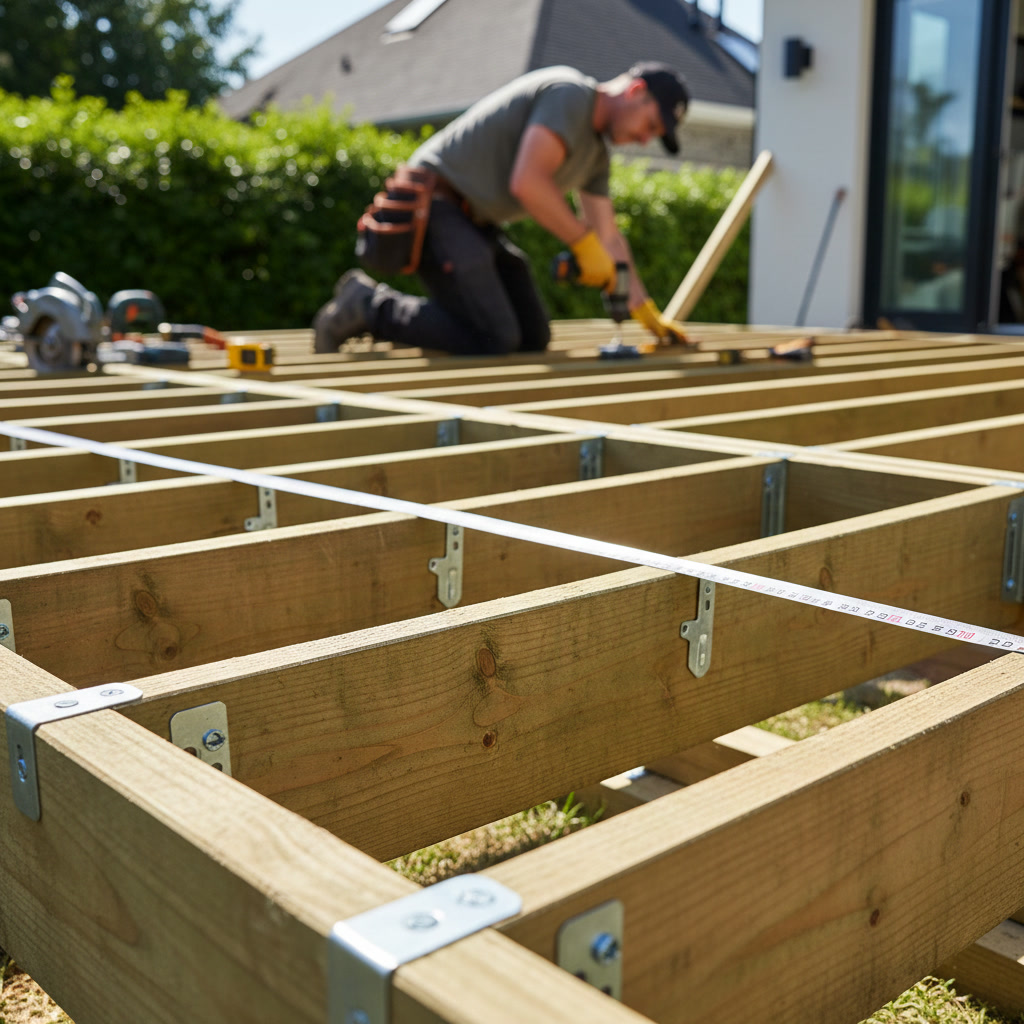
Next, inspect the support posts and beams underneath. Look for cracks, rot, insect damage, or posts that have settled unevenly. Push firmly against posts to check for movement. Any post that shifts or shows significant deterioration needs replacement, not repair.
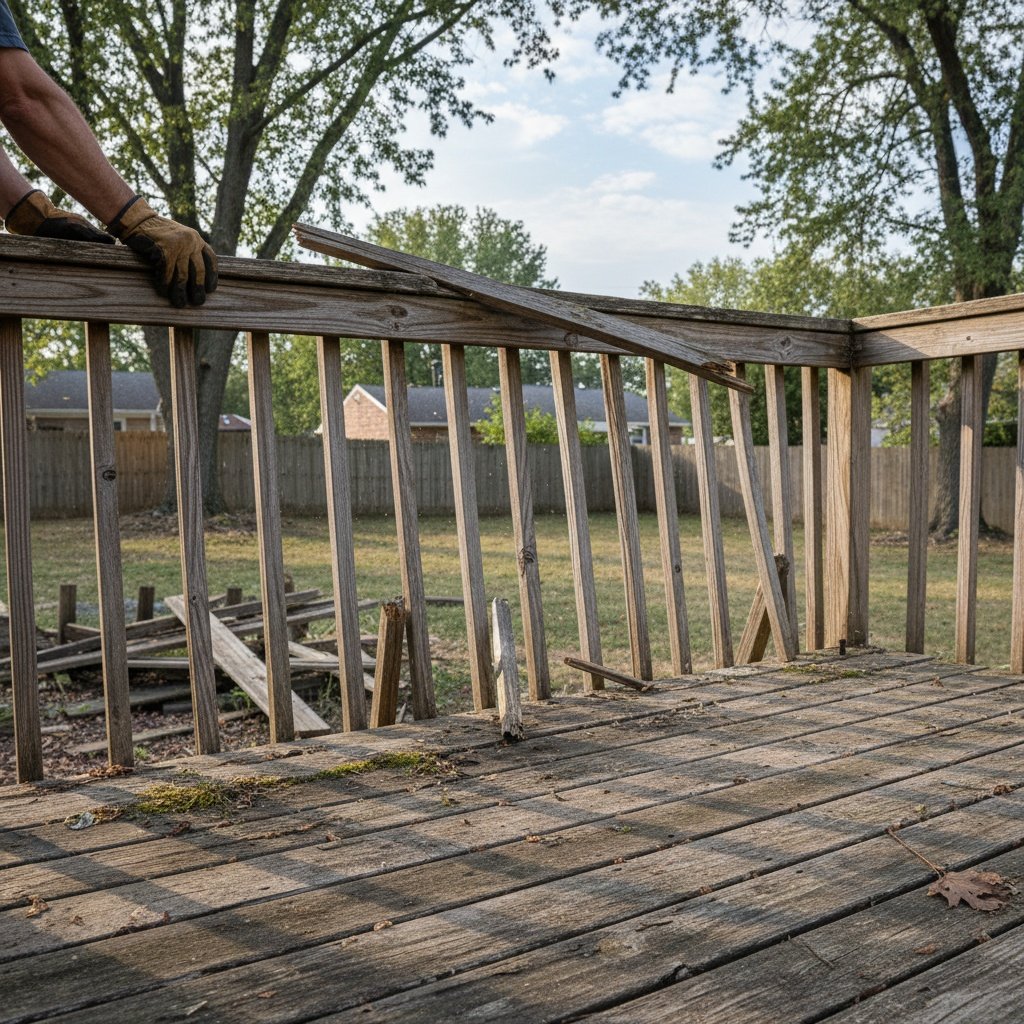
Surface boards tell their own story. A few cracked or splintered boards are normal wear and can be replaced individually. But if more than 25% of your decking shows damage, you’re looking at a replacement scenario. The same applies to railings. Wobbly sections can sometimes be reinforced, but if multiple posts are loose or rotted at the base, the entire railing system likely needs rebuilding.
The Age Factor and Material Lifespan
Age alone doesn’t determine whether you should repair or replace deck structures, but it provides important context. Different materials have different lifespans, and knowing where yours falls helps set realistic expectations.
Pressure-treated lumber decks typically last 15 to 20 years with proper maintenance. If your deck is approaching or past this age and showing multiple issues, replacement usually makes more financial sense than extensive repairs. You’ll spend money fixing problems only to face new ones within a few years.
Cedar and redwood decks can last 20 to 30 years when properly sealed and maintained. These naturally rot-resistant woods often justify repair work if the structural elements remain sound. Composite decking, depending on the generation and brand, lasts 25 to 50 years but can be expensive to repair if specific product lines have been discontinued.
Consider the rule of halves: if your deck has surpassed half its expected lifespan and requires repairs costing more than 50% of replacement cost, replacement is typically the smarter investment.
Maintenance History Matters
A 15-year-old deck that’s been regularly cleaned, sealed, and inspected will be in far better condition than a 10-year-old deck that’s been neglected. If you’ve recently purchased a home and don’t know the maintenance history, err on the side of caution and have a professional inspection performed before making decisions.
Structural Issues Versus Cosmetic Problems
Understanding the difference between structural and cosmetic issues is essential to making an informed choice. Cosmetic problems affect appearance but not safety. Structural problems compromise the deck’s ability to support weight safely.
Cosmetic issues you can repair include faded or discolored boards, minor surface cracks, small areas of splintering, loose deck board nails, peeling paint or stain, and weathered railings that are still structurally sound. These repairs are straightforward and cost-effective.
Structural issues that often require replacement include rotted or cracked support beams, deteriorated ledger board connections, posts with extensive rot or insect damage, joists that have cracked or sagged significantly, and foundation issues affecting multiple support points. When structural elements fail, they rarely fail alone. Replacing one compromised beam often reveals that adjacent components are also damaged.
Pro Tip: Use a screwdriver or awl to probe wood in areas that stay damp or touch the ground. If the tool sinks more than a quarter inch into the wood, you’re dealing with rot that requires replacement, not repair.
Cost Analysis and Budget Considerations
Money drives most decisions, and the repair versus replacement question is no exception. The challenge is getting accurate numbers before committing to either path.
Minor deck repairs typically cost between $500 and $2,500, depending on the scope. This includes replacing a few boards, reinforcing railings, fixing stairs, or addressing isolated rot. These repairs make sense when the deck’s structural integrity is sound and the work extends its useful life by at least five years.
Major repairs, those involving joist replacement, ledger board work, or replacing more than a quarter of the decking, typically run $3,000 to $8,000. At this price point, you need to compare carefully against replacement costs.
Complete deck replacement costs vary widely based on size, materials, and features. A basic 12×16 pressure-treated deck starts around $6,000 to $10,000. The same size in composite materials runs $10,000 to $18,000. Custom designs with multiple levels, built-in features, or premium materials can exceed $25,000.
Hidden Costs to Consider
Repair projects often uncover additional problems once work begins. Budget at least 20% more than the initial estimate to account for hidden rot, code compliance upgrades, or related issues. Replacement projects have more predictable costs since everything is built new to current standards.
Return on Investment
A new deck recoups about 70% to 80% of its cost in home value, according to recent remodeling studies. Repairs add little to resale value but maintain your home’s existing worth. If you plan to sell within three years, replacement might make more sense. If you’re staying long-term, strategic repairs can extend your timeline until replacement becomes necessary.
Code Compliance and Safety Standards
Building codes evolve, and decks built 15 or 20 years ago often don’t meet current standards. This creates a complicating factor when deciding whether to repair or replace deck structures in Massachusetts communities like Hudson, Marlborough, Natick, and surrounding areas.
Current Massachusetts building codes require specific spacing for railing balusters (no more than four inches apart), minimum railing heights of 36 inches, specific fastener types for ledger boards, and proper flashing to prevent water intrusion. Many older decks fail these requirements.
When you pull a permit for deck repairs, inspectors may require you to bring non-compliant elements up to code. This can turn a simple repair project into a much larger undertaking. Complete replacement allows you to build to current standards from the start, eliminating this uncertainty.
Some towns in the Worcester and Middlesex County areas have specific requirements for deck construction. Working with a licensed contractor familiar with local codes ensures your project passes inspection the first time, whether you’re repairing or replacing.
Key Takeaway: Any deck repair requiring a permit may trigger code compliance upgrades for the entire structure. Get clarity from your building department before committing to a repair budget.
When Repair Makes the Most Sense
Certain situations clearly favor repair over replacement. Choosing repair is smart when your deck’s structural components, the posts, beams, joists, and ledger board, are in excellent condition. Age under 10 years with proper maintenance history also points toward repair.
If damage is isolated to a specific area, such as boards near a grill or high-traffic zone, repair is the obvious choice. Budget constraints can make repair the only viable short-term option, though you should plan for eventual replacement.
Unique or custom features that would be expensive to replicate, like specialty railings or integrated planters, often justify repairing the existing structure. And if you’re planning to sell soon and need the deck functional but don’t want to invest in full replacement, targeted repairs can get you through the transaction.
Making Repairs Last
If you choose repair, commit to proper maintenance afterward. Clean the deck twice yearly, reseal or restain every two to three years, address new issues immediately before they spread, ensure proper drainage to prevent water pooling, and trim vegetation that holds moisture against deck components.

When Replacement Is the Better Investment
Replacement becomes the clear choice when your deck has widespread structural damage affecting multiple support components. If the structure is 20 years old or older, especially with deferred maintenance, starting fresh makes more sense than patching problems.
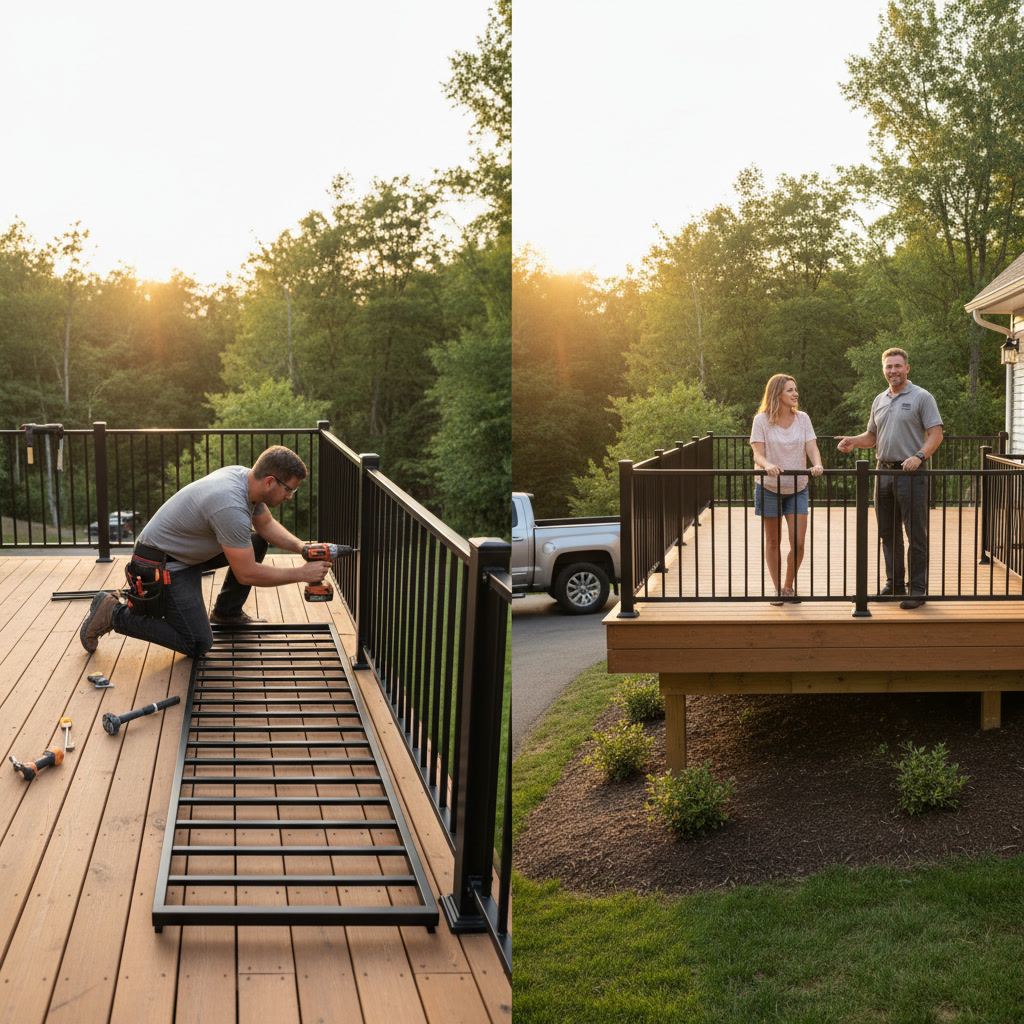
When repair costs exceed 50% of replacement cost, you’re throwing money at a failing structure. Major code compliance issues that require extensive rework also tip the scales toward replacement. And if you’re planning a home renovation or want to change the deck’s size, layout, or features, replacement lets you build exactly what you need.
Chronic moisture problems, often caused by poor original design or drainage, rarely get fixed with repairs. Replacement allows you to address the root cause through better design, proper flashing, and improved water management.
Material Upgrade Opportunities
Replacement gives you the chance to upgrade to low-maintenance composite decking, more durable fastening systems, better railing designs, and improved structural engineering. These improvements can eliminate the maintenance headaches that come with traditional wood decks.
The Inspection Process
Whether you’re leaning toward repair or replacement, start with a professional inspection. A qualified deck builder can identify issues you might miss and provide accurate cost estimates for both options.
During an inspection, the contractor should examine all structural components, test for rot and insect damage, check fastener condition and placement, verify ledger board attachment and flashing, assess railing stability and code compliance, and evaluate drainage and moisture issues.
A thorough inspection takes 30 to 60 minutes for an average-sized deck. The contractor should provide a written assessment noting specific problems, repair options with costs, replacement options with costs, and recommendations based on the deck’s condition and your goals.
Get at least three inspections and estimates from licensed, insured contractors. Prices will vary, but the assessments should be consistent. If one contractor identifies major structural issues the others missed, that’s a red flag worth investigating further.
Frequently Asked Questions
How long does a typical deck repair take compared to replacement?
Minor deck repairs usually take one to three days depending on the scope. Major repairs involving structural components can take one to two weeks. Complete deck replacement typically takes two to four weeks from demolition through final inspection, though weather and permit processing can extend this timeline.
Can I repair just the deck boards and leave the structure underneath?
Yes, if the underlying structure is sound. Many decks need new surface boards while the frame remains solid. However, have a professional inspect the joists and supports before installing new decking. There’s no point putting new boards on a failing structure, and accessing those structural elements later requires removing your new decking.
Will my homeowners insurance cover deck repairs or replacement?
Insurance typically covers sudden damage from covered events like storms or falling trees but excludes normal wear, maintenance, or rot. If your deck failed due to age or deferred maintenance, you’ll pay out of pocket. Review your policy and document any storm damage immediately to maximize your claim potential.
Do I need a permit for deck repairs in Massachusetts?
Minor cosmetic repairs like replacing a few boards usually don’t require permits. Structural work, including joist replacement, post repairs, or railing replacement, typically does. Requirements vary by town, so check with your local building department before starting work. Unpermitted work can create problems when selling your home.
How can I extend my deck’s life after making repairs?
Regular maintenance is critical. Clean your deck twice yearly to remove debris and mildew. Reseal or restain wood decks every two to three years. Ensure proper drainage so water doesn’t pool. Trim nearby vegetation to improve air circulation. Address small problems immediately before they become large ones. Annual inspections catch issues early when they’re cheap to fix.
Making Your Decision
The choice to repair or replace deck structures depends on your specific situation, structural condition, budget, timeline, and long-term plans. Focus on safety first, costs second, and aesthetics third. A beautiful deck that might collapse is worthless, and cheap repairs that fail within two years waste money you could have invested in replacement.
Work with experienced professionals who can assess your deck honestly and provide clear options. ANJO Home Improvement Inc serves homeowners throughout Hudson, Framingham, Natick, Newton, Wellesley, Brookline, and surrounding Massachusetts communities with expert deck repair and replacement services. Our team evaluates every project individually, providing transparent recommendations based on your deck’s actual condition and your goals.
If you’re facing the repair versus replacement decision, contact ANJO Home Improvement Inc at +17745056597 for a thorough inspection and honest assessment. We’ll help you understand exactly what your deck needs and what each option will cost, so you can make the choice that’s right for your home and budget.